Why Giving and Receiving Feedback Determines Who Advances Faster
“Can I give you some feedback?” Those six words make most professionals tense up. We avoid giving it. We dread receiving it. Feedback is treated like an uncomfortable obligation rather than a career accelerator.
But here’s what the data reveals: the professionals who get comfortable with feedback, both giving and receiving it, advance faster, perform better, and build stronger relationships than those who avoid it.
Why Feedback Matters
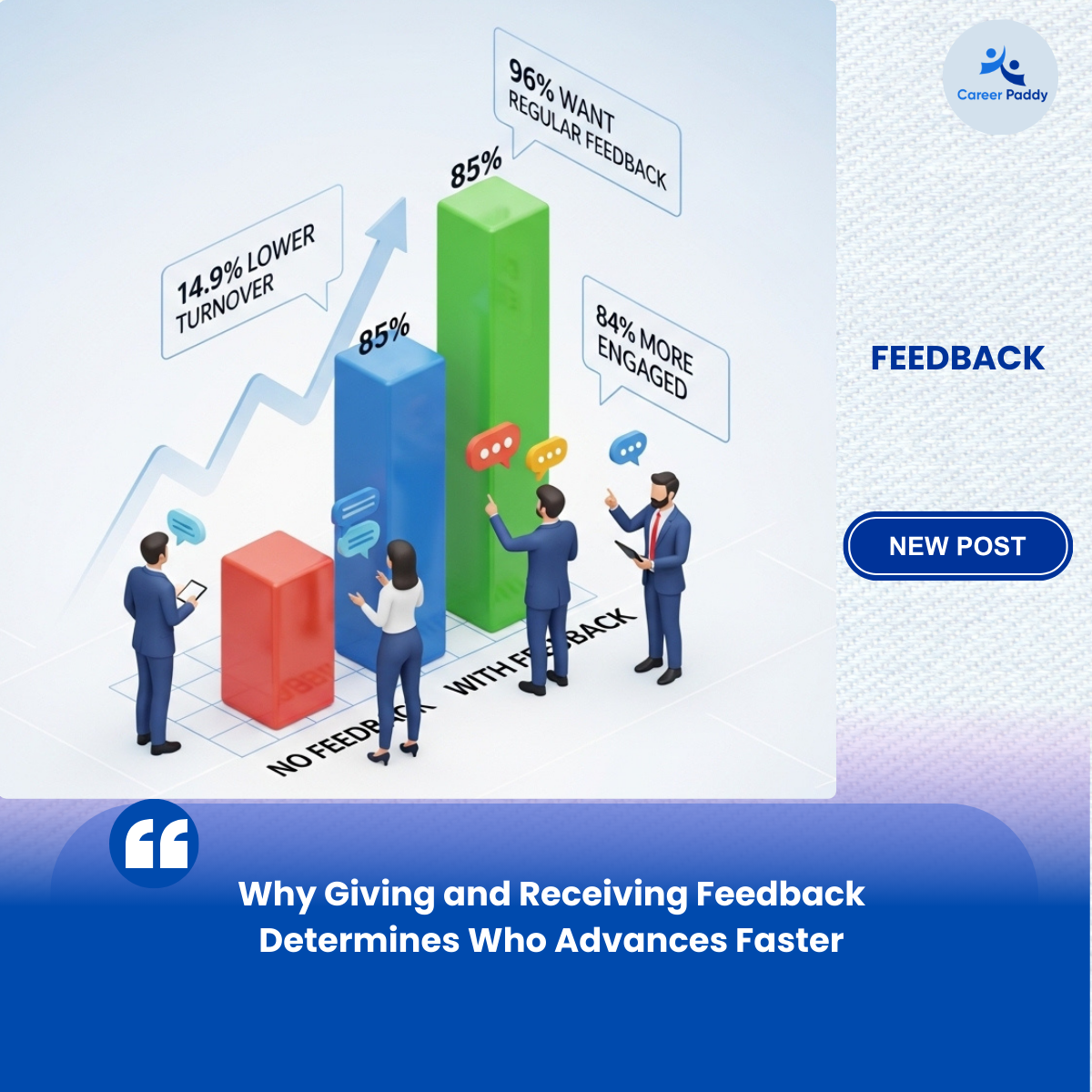
- 96% of employees now state that receiving regular feedback is a primary driver of their daily motivation Career Geek, yet less than 30% of global workers report receiving the consistent feedback they crave Career Geek.
- Companies that invest in regular employee feedback have 14.9% lower turnover rates than organizations where employees do not receive feedback AU.
- 69% of employees say they would work harder if they felt their efforts were being recognized through feedback AU.
- 84% of employees state that timely feedback improves their engagement Burnett Specialists, while 40% of employees who receive little to no feedback are actively disengaged from their work AU.
- 92% of respondents agreed that negative redirecting feedback, when delivered appropriately, is effective at improving performance AU.
- Nearly all workers (96%) believe that receiving feedback regularly benefits them Yotru, and 83% of employees say they appreciate feedback, whether it is positive or negative Yotru.
Common Misconception
Many people believe feedback is about criticism, judgment, or pointing out flaws. In reality, effective feedback is about growth, clarity, and helping people understand their impact. The best feedback focuses on behaviors and outcomes, not personality, and includes both recognition of strengths and guidance for improvement.
How to Give and Receive Feedback Effectively
Giving Feedback:
- Be Timely – feedback loses impact when delayed. Address issues and recognize wins close to when they happen, not months later during annual reviews. In 2025, 48% of employees are being asked for feedback more frequently than once a year, up from just 35% in 2024 UCLA Anderson Review.
- Focus on Behaviour, Not Personality – use the Situation-Behaviour-Impact model: describe the specific situation, the observable behaviour, and the impact it had. This makes feedback actionable.
- Balance Recognition with Development – strengths-based feedback significantly improves outcomes. Employees who received strengths feedback had turnover rates that were 14.9% lower than those of employees who received no feedback.
- Make It Specific and Actionable – vague feedback like “be more professional” doesn’t help. Specific guidance like “in client meetings, avoid checking your phone” gives clear direction. Half of employees fail to act on feedback, often due to unclear or unhelpful suggestions Burnett Specialists.
Receiving Feedback:
- Listen Without Defensiveness – your first reaction will be emotional. Take a breath, listen fully, and ask clarifying questions before responding.
- Separate Your Performance from Your Identity – feedback about your work isn’t feedback about your worth as a person. This mental separation makes it easier to hear.
- Ask for Examples – if feedback seems vague, request specific instances. “Can you give me an example of when I did that?” helps you understand and improve.
- Follow Up – after receiving feedback, check back in. “I’ve been working on the communication issue we discussed. How am I doing?” shows growth and engagement.
In Summary
Feedback isn’t comfortable, but it’s one of the most powerful career development tools available. 85% of employees take more initiative when they receive feedback in the workplace, 73% believe they are better collaborators, and 48% care more about their work AU.
Professionals who master the art of giving and receiving feedback don’t just improve faster; they build stronger relationships, earn more trust, and position themselves for leadership. Nearly two-thirds of employees have expressed a desire for more regular or actionable feedback from their managers Burnett Specialists, yet many never receive it.
The discomfort of feedback is temporary. The cost of avoiding it lasts your entire career. In a workplace where only 1% of employees who received positive feedback reported being actively disengaged, compared to 40% of those who didn’t receive feedback AU, your ability to engage in honest, constructive conversations becomes a significant competitive advantage.
You can visit CareerPaddy for more information that can guide you through your career.
You can also access soft skills that can help you balance your career on the CareerPaddy app:
Stay tuned for more analysis from CareerPaddy
#SoftSkills #SurvivalSkills #CareerGrowth #WorkplaceSuccess #CareerPaddy #CareerTips #Feedback #ProfessionalDevelopment #PerformanceManagement #Leadership
