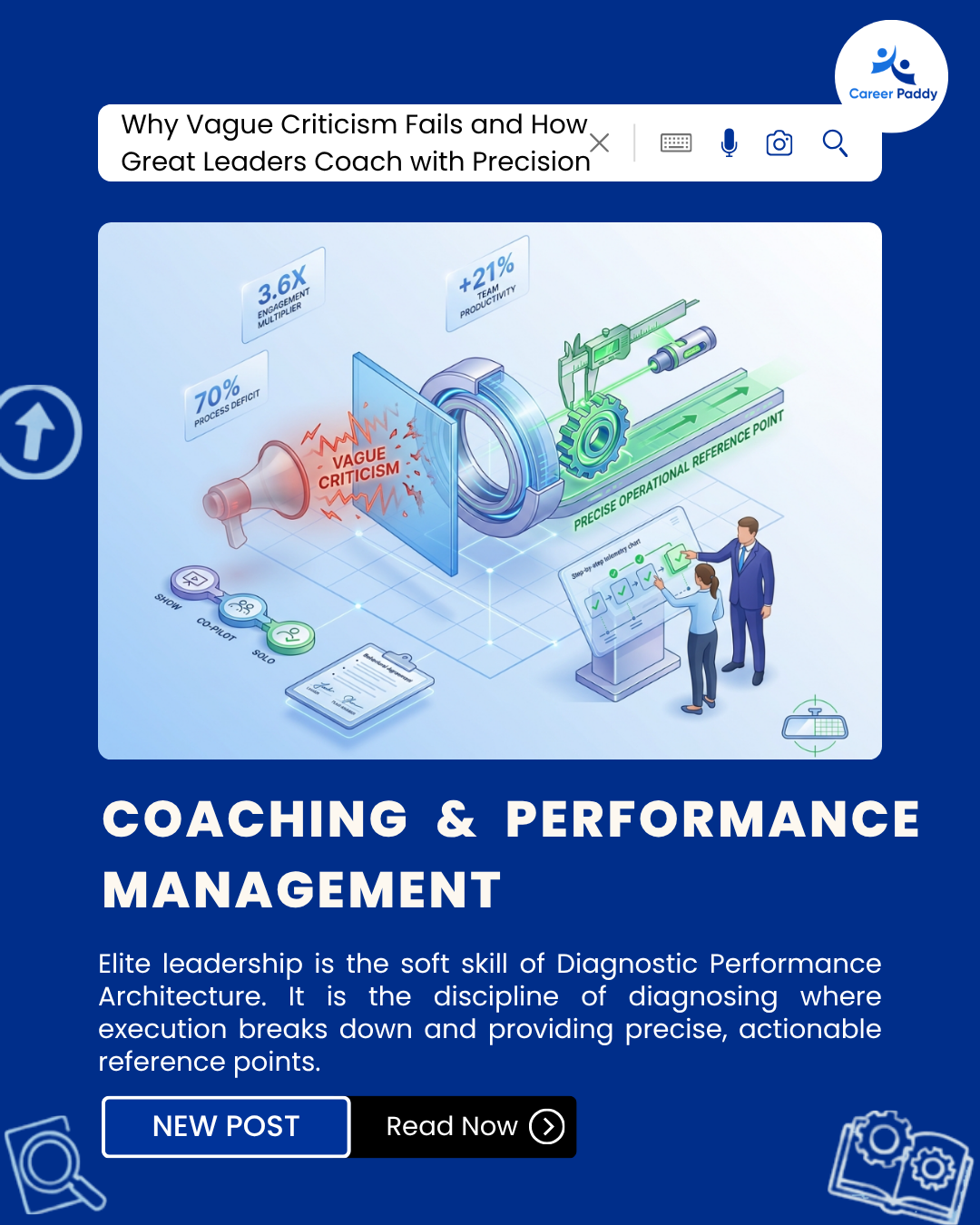
Why Vague Criticism Fails and How Great Leaders Coach with Precision
A young driver was learning how to parallel park on a busy street. On his first attempt, he misjudged the angle and bumped the curb.
His father shouted from the passenger seat. “Just park the car properly! Why are you so careless? Pay more attention!”
The driver became nervous. His hands started shaking on the steering wheel. He tried again, panicked, and hit the curb even harder.
The next day, a professional driving instructor sat in the passenger seat.
She did not shout. She gave him a clear reference point.
“Stop the car. Look in your right mirror. When your back wheel lines up with the bumper of the car next to you, turn the wheel one full rotation to the right.”
The young driver followed the exact visual cue. He slipped smoothly into the parking space on his very first try.
The Failure of Vague Managerial Demands
The young driver did not lack effort or motivation.
He did not need to “care more.” He simply lacked a clear operational reference point.
In corporate leadership, average managers act like that frustrated parent every single day.
When an employee makes a mistake, the manager vents their frustration. They give vague, emotional criticisms.
They demand that team members “take more ownership” or “be more proactive.”
These vague demands never fix performance issues.
Telling someone to work harder without showing them where their process fails only creates fear and anxiety.
Performance mistakes are rarely character flaws. Most often, they stem from ambiguous instructions, missing reference points, or broken tools.
Elite leadership is the soft skill of Diagnostic Performance Architecture.
It is the discipline of diagnosing where execution breaks down and providing precise, actionable reference points.
Why Coaching Matters
The Engagement Multiplier: Research from Gallup Workplace Analytics shows that employees who receive regular, strength-based coaching are 3.6x more engaged. Consistent guidance directly drives a 21% boost in team productivity.
The Root Cause Reality: Studies published in the Harvard Business Review reveal that 70% of employee performance failures stem from poor process design and unclear expectations. Structural clarity resolves most performance friction.
The Retention Advantage: According to the Center for Creative Leadership, managers who use structured coaching frameworks improve team retention by 28%. Coaching accelerates new-hire ramp-up speed by 40%.
The Executive Benchmark: Over 86% of corporate executives rate talent development and performance coaching as top prerequisites for senior VP promotions (NACE Career Readiness Framework). Great organizations promote builders of talent.
The Common Misconception
Many managers believe that coaching underperforming staff means lowering standards or tolerating mediocrity.
That is permissiveness, not coaching.
True coaching combines High Warmth with Uncompromising Standards.
You do not excuse poor results. Instead, you provide the tools, clarity, and feedback necessary for the employee to reach the standard.
Weak managers tolerate mediocrity. Aggressive managers demand results without support. Elite leaders build the capability to achieve excellence.
How to Master Diagnostic Performance Architecture
Diagnose Root Causes Using the Skill-Will-Hill Model: When an employee struggles, determine if the issue is ability (Skill), motivation (Will), or organizational roadblocks (Hill). Matching your leadership response to the actual root cause prevents wasted effort.
Replace Vague Adjectives with Measurable Telemetry: Eliminate words like “proactive” or “detail-oriented” from your feedback. Give concrete behavioral instructions, such as: “Submit the updated client report by 4:00 PM every Thursday with all margin columns verified.”
Deploy the Show, Co-Pilot, and Solo Progression: Train struggling direct reports in three structured stages. Demonstrate the task yourself first, execute it together on the second attempt, and then allow them to perform independently with review.
Hold Dedicated Weekly Coaching Check-Ins: Schedule recurring twenty-minute one-on-one sessions dedicated exclusively to problem-solving and skill building. Use this time to remove operational blockers rather than interrogating task status.
Document Performance Agreements in Writing: Summarize key coaching points and agreed action steps in a follow-up email after every session. Written documentation creates mutual accountability and ensures both parties share identical expectations.
Account for Local Operating Challenges: In the West African workplace, power cuts and transit disruptions can impact daily schedules. Help your team build realistic buffer times into their workflows while holding delivery standards firm.
In Summary
Yelling at people to pay more attention will never produce high-performing teams.
If your direct reports are missing targets, stop venting frustration. Look at the operational reference points, inspect the process, and provide clear behavioral guidance.
Upgrade your feedback from emotional criticism to diagnostic coaching.
Because in sustainable leadership, you do not build business results directly—you build the people who deliver them.
You can visit CareerPaddy for more practical resources on performance management and survival skills.
Access survival courses on Coaching & Team Leadership on:
Career Paddy App on Play Store
Career Paddy App on Apple Store
Stay tuned for more career insights from CareerPaddy.
#Leadership #Management #Coaching #PerformanceManagement #CareerGrowth #WorkplaceSuccess #CareerPaddy #TeamLeadership #Productivity #EmployeeEngagement
