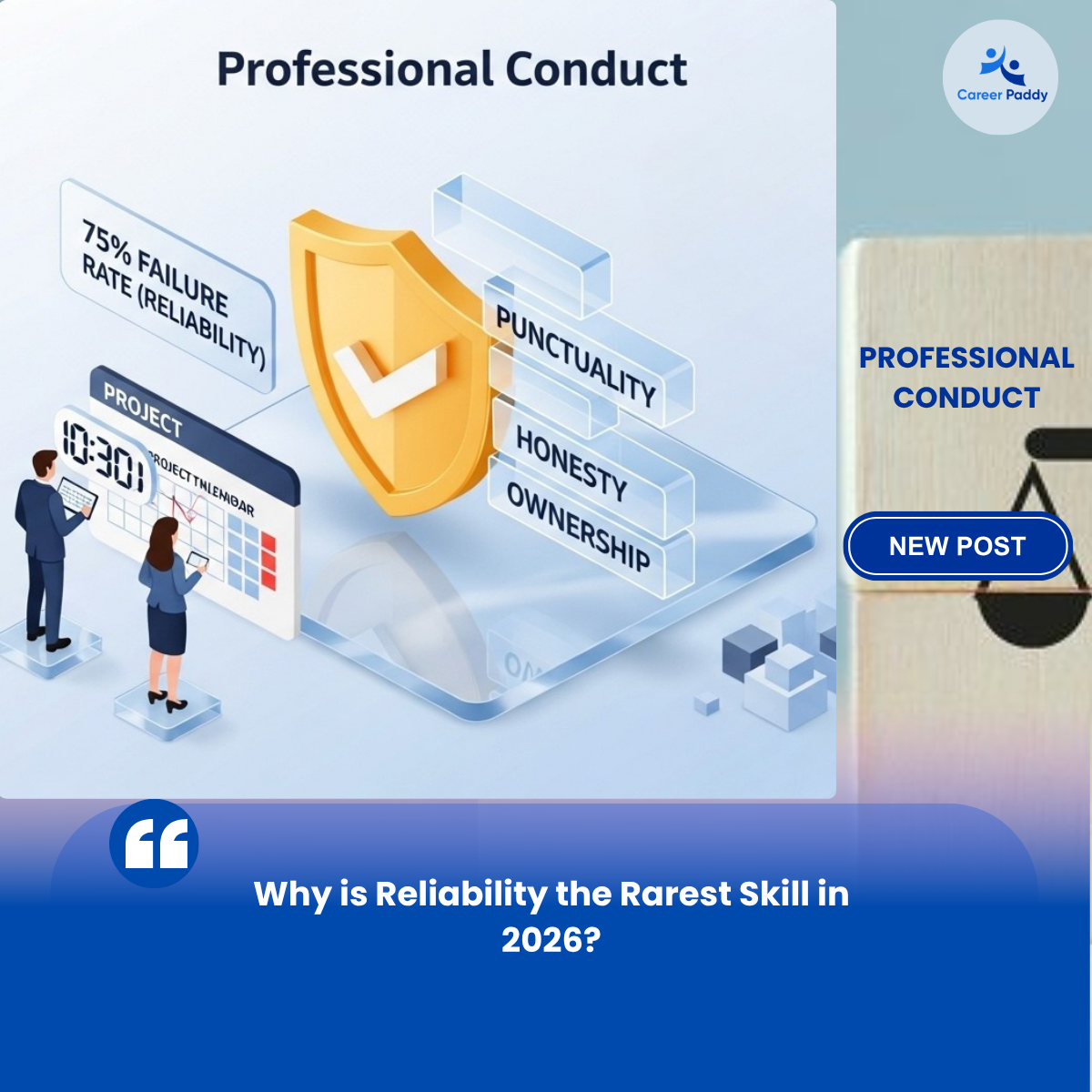
Why is Reliability the Rarest Skill in 2026?
Professional conduct is a strategic asset. In the modern workplace, we often mistake “ethics” for a set of restrictive rules; the reality can not be any farther, though, as the workforce becomes more fragmented and remote-heavy, the “Trust Tax”, the time and energy wasted on checking up on unreliable people, has skyrocketed.
Professional Conduct is the survival skill of Predictability. When you are ethically consistent and professionally reliable, you lower the “transaction cost” of working with you. In 2026, being the person who simply does what they said they would do, when they said they would do it, puts you in the top 5% of the global talent pool.
Why Professional Conduct Matters
- The Reliability Gap: 75% of managers cite “unreliability” and “lack of follow-through” as the primary reasons entry-level hires fail within the first six months (Society for Human Resource Management – SHRM, 2025).
- The Promotion Fast-Track: Employees who consistently meet internal deadlines without reminders are 44% more likely to be considered for leadership roles, regardless of their technical seniority (Forbes Advisor, 2024).
- Cost of Ethical Lapses: Workplace misconduct and “minor” ethical slips (like time theft or data mishandling) cost global businesses an estimated $20 billion annually in lost productivity (Ethics & Compliance Initiative, 2025).
- Trust as Currency: 81% of executives state they would rather work with a “reliable average performer” than a “brilliant but erratic” one (Harvard Business Review, 2026).
- Remote Accountability: In 2026, 92% of remote-first companies use “responsiveness and adherence to ethics” as the primary metric for job security over total hours logged (Gartner Future of Work 2026).
Common Misconception
The misconception is that “work ethics” means being a “yes-man” or staying late to look busy. True professional conduct is actually about Boundaries and Transparency. It is more ethical to say “No, I cannot meet that deadline” upfront than to say “Yes” and fail to deliver. Professionalism isn’t about perfection; it’s about the integrity of your word.
How to Master Professional Conduct
- The “Closed-Loop” Communication: Never leave a request hanging. Even if you don’t have the answer, acknowledge the message and provide a timeline for when you will.
- Radical Ownership: When a mistake happens (and it will), own it within the first 10 minutes. An ethical professional provides the “Fix” alongside the “Fail.”
- Digital Punctuality: In 2026, “on time” is 2 minutes early for a video call. This shows respect for the cognitive energy of others.
- Information Integrity: Practice “Data Ethics.” Treat company data and internal conversations with a level of confidentiality that suggests you are already an executive.
- The “Under-Promise, Over-Deliver” (UPOD) Framework: Always add a 20% buffer to your estimated delivery times. Delivering a day early creates “Trust Equity” that you can spend when a real crisis occurs.
- Professional Grooming (Digital & Physical): Your environment on a video call is your “office.” A clean, distraction-free setup signals that you take the work, and the person on the other side seriously.
In Summary
Professional conduct is the foundation upon which all other survival skills are built. You can be a brilliant critical thinker or a master negotiator, but if the team cannot trust your word, your brilliance is irrelevant.
In 2026, the “Ethical Professional” is a rare breed. By mastering the basics of work ethics, punctuality, honesty, and reliability, you aren’t just being “good”; you are becoming indispensable.
You can visit CareerPaddy for more information that can guide you through your career.
You can also access survival skills courses on professional conduct on
Stay tuned for more analysis from CareerPaddy
#SoftSkills #SurvivalSkills #CareerGrowth #WorkplaceSuccess #CareerPaddy #CareerTips #WorkEthics #Professionalism #Reliability
