Why Great Work Fails When You Cannot Speak the Currency of Leadership
A seasoned airline captain flew a commercial airliner through heavy cloud cover. Two hundred miles before landing, the flight instruments detected a minor hydraulic anomaly. The captain did not wait for the landing gear to jam over the runway.
He immediately radioed air traffic control and stated the issue clearly. He provided two safe contingency vectors and confirmed his preferred landing strip.
When the plane landed smoothly, the control tower was fully prepared. There was zero panic.
The Fatal Mistake of Managing in the Dark
In corporate leadership, many team leads operate in total radio silence.
They run projects behind closed doors. When problems emerge, they hide the warning signs, hoping to fix everything before anyone notices.
Then, forty-eight hours before a major launch, the project collapses.
The team lead rushes into the executive office with a list of excuses. They blame vendors, budget limits, or sudden technical bugs.
To the executive team, this is an unforgivable failure.
Leaders do not expect perfection. But they despise blindside surprises.
When you surprise senior leadership with bad news, you destroy their trust in your judgment. They immediately doubt your ability to handle higher operational responsibility.
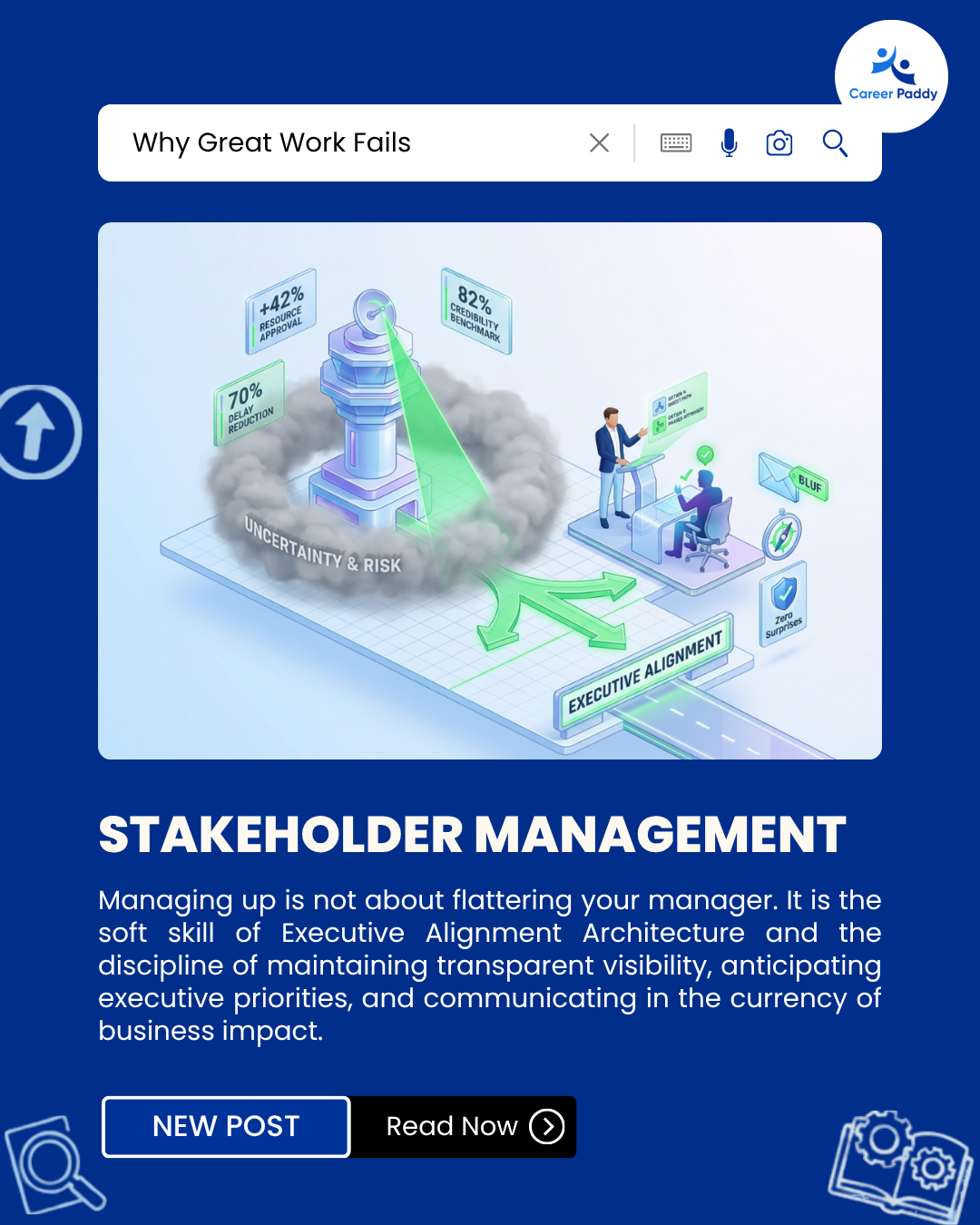
Managing up is not about flattering your manager. It is the soft skill of Executive Alignment Architecture.
It is the discipline of maintaining transparent visibility, anticipating executive priorities, and communicating in the currency of business impact.
Why Stakeholder Management Matters
The Resource Approval Advantage: Research from the Harvard Business Review shows that managers who proactively align with senior leaders are 42% more likely to secure project funding. Clear upward visibility wins executive backing.
The Project Delivery Multiplier: Studies by McKinsey & Company reveal that poor cross-functional alignment accounts for 70% of enterprise project delays. Proactive stakeholder mapping keeps complex initiatives on schedule.
The Executive Credibility Filter: According to research by Gartner, 82% of executives state that bringing problems without solutions destroys mid-level credibility. Leaders reward managers who propose structured answers.
The Promotion Differentiator: Over 88% of executive recruiters evaluate upward communication and stakeholder diplomacy when filling director-level positions (NACE Career Readiness Framework). High-visibility leaders build cross-departmental trust.
The Common Misconception
Many professionals believe that managing up is political maneuvering or flattery.
That assumption creates cynicism and keeps talented managers isolated.
True stakeholder management is about Operational Friction Reduction.
Your executives carry immense strategic responsibility. When you provide concise updates, flag risks early, and offer actionable options, you make their decision-making faster and safer.
Passive managers wait to be questioned. Strategic leaders provide clarity before doubt arises.
How to Master Executive Alignment Architecture
Speak in the Currency of Business Impact: Stop giving executives detailed logs of your daily activities. Frame every update in terms of revenue, risk mitigation, and timeline milestones. Translating technical work into business value earns immediate executive respect.
Deploy the “No Surprises” Early Warning Rule: Flag potential timeline or budget slips at the earliest indicator. Give leadership time to adjust organizational strategy rather than forcing them into panic mode. Early risk communication demonstrates executive maturity.
Always Present Two Solutions with Every Problem: Never dump an obstacle on your manager’s desk without a recommendation. Frame the issue simply: “We face Delay X. We can execute Option A with low cost, or Option B for faster speed, and I recommend Option B.” Providing solutions positions you as a partner, not a dependent.
Use the Bottom Line Up Front (BLUF) Format: Structure every executive email with the primary conclusion or request in the first two sentences. Place background context and supporting bullet points below. Busy executives appreciate direct, scannable clarity.
Map Cross-Functional Stakeholder Dependencies: Identify leaders in sales, legal, finance, and operations whose approval impacts your deliverable. Engage these stakeholders weeks before launch to resolve conflicting priorities early. Proactive alignment prevents late-stage departmental vetoes.
Navigate Local Corporate Hierarchies with Discretion: In the West African business landscape, respect for executive seniority is paramount. Frame differing viewpoints with diplomatic tact and document agreements cleanly in writing. Professional diplomacy bridges organizational divides effortlessly.
In Summary
You can lead the hardest-working team in the company. But if senior leadership feels blindfolded by your communication, your career will stall.
Execs promote managers who provide predictability, clarity, and strategic leverage.
Radio in from the fog early. Frame updates in business impact, bring structured solutions, and eliminate surprises from your leadership playbook.
Because in executive management, the leader who controls the flow of clarity controls their own advancement.
You can visit CareerPaddy for more practical resources on stakeholder management and survival skills.
Access survival courses on Stakeholder Management & Upward Communication on:
Career Paddy App on Play Store
Career Paddy App on Apple Store
Stay tuned for more career insights from CareerPaddy.
#Leadership #Management #StakeholderManagement #ManagingUp #CareerGrowth #WorkplaceSuccess #CareerPaddy #ExecutivePresence #CommunicationSkills #CorporateStrategy
