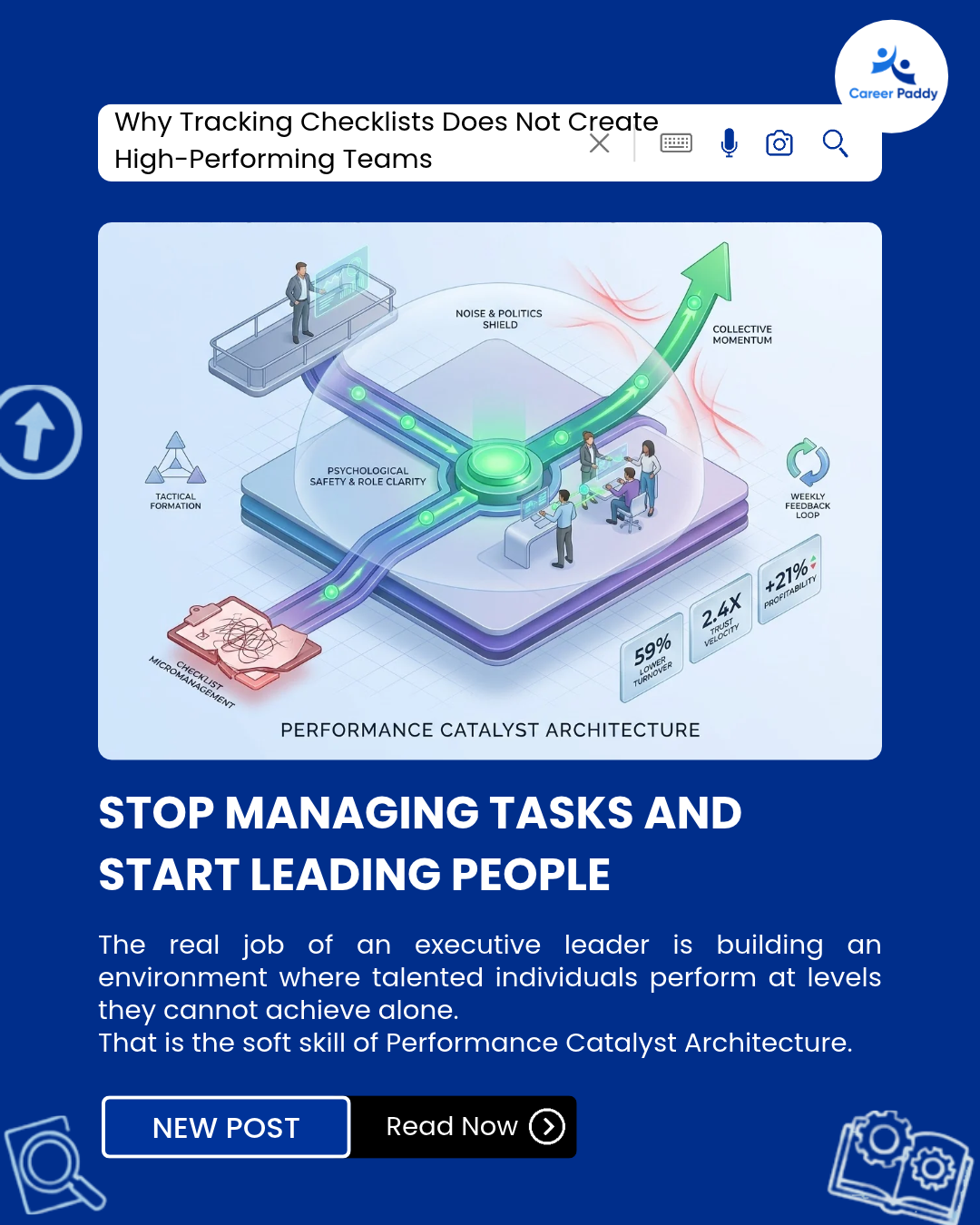
Why Tracking Checklists Does Not Create High-Performing Teams and How Elite Leaders Engineer Collective Momentum
A community football coach inherited a squad filled with talented individual players.
Every single one of them could dribble past three defenders. Every one could strike from distance. On paper, they were the strongest team in the league.
Yet they lost match after match.
The coach watched film from the first five games and noticed the same pattern. Each player held the ball too long, dribbled into dead ends, and refused to make the simple pass to an unmarked teammate.
Everyone wanted to be the hero. Nobody wanted to be the assist.
The coach did not replace a single player. Instead, he changed one rule during training.
He banned any player from holding the ball for more than three touches. If you received the ball, you had three touches to find a teammate or lose possession.
The first two training sessions were chaotic.
By the third week, something shifted. Players began scanning the pitch before the ball arrived. They started calling for each other. They started moving into spaces they had never occupied before.
Within two months, the squad went on a twelve-match unbeaten run. They did not win because they became better individual players. They won because they became a team.
The Task Tracker Trap
That community football squad mirrors thousands of corporate teams across Africa and beyond.
The manager tracks deliverables on spreadsheets and assign tasks on Monday, then they proceed to check status on Friday.
They manage work. They do not lead people.
In senior leadership, task tracking is baseline hygiene. It is the equivalent of checking that the football pitch is mowed before kick-off.
The real job of an executive leader is building an environment where talented individuals perform at levels they cannot achieve alone.
That is the soft skill of Performance Catalyst Architecture.
It is the discipline of designing team conditions, psychological safety, role clarity, and collective accountability that transform a group of capable professionals into a genuinely high-performing unit.
Why Leading Teams Matters
The Performance Multiplier: Research from Google’s Project Aristotle found that psychological safety is the single strongest predictor of team performance, far more important than individual talent, seniority, or technical expertise.
The Engagement Gap: According to Gallup’s State of the Global Workplace Report, only 23% of employees worldwide are actively engaged at work. Teams with highly effective leaders show 59% lower turnover and 21% higher profitability.
The Delegation Dividend: A study published by the Harvard Business Review found that leaders who effectively delegate and develop team capabilities deliver 33% higher revenue growth than those who centralise decisions.
The Trust Velocity Effect: Research from McKinsey & Company shows that high-trust teams resolve internal conflicts 2.4x faster and execute cross-functional projects with 40% fewer coordination delays.
The Common Misconception
Many leaders believe that driving performance means applying constant pressure.
They set aggressive targets, monitor every task, and interpret silence as laziness.
This creates compliance at best and resentment at worst.
Pressure without purpose produces burnout. Accountability without trust produces fear.
Sustainable high performance never comes from external force. It comes from internal motivation amplified by environmental clarity.
Weak leaders push harder. Average managers monitor more. Elite leaders engineer the conditions where people push themselves.
How to Master Performance Catalyst Architecture
Establish Role Clarity Before Demanding Output: Before launching any project, ensure every team member can answer three questions without hesitation: What is my specific contribution? Who depends on my output? What does excellent delivery look like? Ambiguity is the silent assassin of team performance.
Build Psychological Safety Through Visible Vulnerability: Share your own mistakes openly in team settings. When leaders admit what they got wrong, team members stop hiding problems and start surfacing risks early. Early risk visibility prevents catastrophic project failures.
Replace Annual Reviews with Weekly Micro-Feedback Loops: Annual performance reviews are autopsies. They diagnose problems months after the damage is done. Install brief weekly check-ins where you ask two questions: What is blocking you? What support do you need from me this week?
Design Stretch Assignments That Develop, Not Punish: High performers stagnate when they only receive tasks within their comfort zone. Assign challenges that sit 15–20% beyond their current capability, then provide the scaffolding and air cover to let them grow through the discomfort.
Create Shared Team Identity Beyond Individual KPIs: Give the team a collective mission statement that connects their daily work to a larger organisational purpose. When people feel they belong to something meaningful, discretionary effort follows naturally without external incentives.
Protect Your Team’s Energy from Organisational Noise: Senior leaders must shield their teams from unnecessary executive politics, shifting priorities, and corporate theatre. Your job is to absorb ambiguity at the top and translate it into actionable clarity at the team level.
In Summary
You will never build a high-performing team by tracking tasks more aggressively.
If your team delivers results only when you are watching, you have built compliance, not commitment.
Stop managing checklists. Start engineering the environment where your people choose to bring their best work every single day.
Because in executive leadership, your performance is not measured by what you produce personally, but by what your team produces collectively.
You can visit CareerPaddy for more practical frameworks on building and leading high-performing teams.
Access leadership modules on Team Performance & People Leadership on:
Career Paddy App on Play Store
Career Paddy App on Apple Store
Stay tuned for more career insights from CareerPaddy.
#Leadership #TeamPerformance #PeopleLeadership #ExecutiveLeadership #Management #CareerGrowth #HighPerformingTeams #WorkplaceSuccess #CareerPaddy #Productivity #Strategy
